
Understanding Virginia Released Inmates
A release is a change in custody, not always a return to the community. A local jail can release someone on bond, recognizance, time served, dismissal, or a court order. It can also transfer that person to a regional jail, the Virginia Department of Corrections, a federal agency, immigration custody, or another lawful custodian. Once the person leaves, the live jail roster may remove the name because the roster describes current custody. The local jail still maintains the booking and release transaction. Court dockets may also show the order that led to the change.
State prison records use another layer. VADOC manages state sentences, prison custody, time computation, facility release, and community supervision. Leaving a VADOC prison does not always mean final discharge. Parole, probation, or post-release supervision may continue through a district office. Discharge means the relevant custody or supervision term has ended. These distinctions prevent a common error: treating a missing roster name as proof that a person walked free.
- Release
- Departure from one custodian through an authorized event, including transfer.
- Parole
- Conditional community release for a legally eligible sentence under Parole Board authority.
- Probation
- Court-ordered community supervision that can replace or follow active confinement.
- Discharge
- The end of the custody or supervision duty shown by the relevant record.
- Detainer
- A request or order that may send a person to another custodian after release processing.
Virginia Release Paths
The legal path determines both the meaning of release and the office that holds the next record. A pretrial jail departure is not a prison discharge. A parole grant is a decision that starts more checks, not the time a gate opened. Virginia generally ended ordinary discretionary parole for felony offenses committed on or after January 1, 1995, but older sentences and specific statutory groups remain eligible. VADOC computes dates and carries out state release processing, while the Virginia Parole Board decides eligible parole matters.
| Release path | What changed | Best record source |
|---|---|---|
| Bond or recognizance | Local jail custody ended under court authority | Jail release transaction and court docket |
| Time served or sentence completion | The active local or state term reached its end | Jail record or VADOC computation and release file |
| Parole | Eligible confinement changed to conditional supervision | Parole report, VADOC locator, and release record |
| Probation or post-release supervision | The person is in the community under court or statutory terms | VADOC district placement and court order |
| Transfer | One custodian released the person to another | Transfer destination plus the receiving locator |
Virginia Code § 53.1-159 also provides mandatory parole before final release for qualifying cases, subject to the section's limits. That is conditional release, not a universal sentence cut. A court order, credit calculation, warrant, or detainer can change what happens after the projected date.
Virginia Release Record Fields
No single Virginia database contains every jail and prison release. The record must be requested from the office that created it. A city, county, or regional jail controls its own booking and release transaction. VADOC controls state commitment, computation, prison release, and supervision files. The Virginia Parole Board holds its decisions, and the sentencing court keeps its orders and docket. A useful request names the person, known identifier, date range, last facility, and the exact fields needed.
| Field | What it establishes |
|---|---|
| Booking or DOC number | Links the event to the correct agency record and helps distinguish similar names. |
| Release date and time | Shows when the named custodian completed its release transaction, if maintained. |
| Release type or authority | Identifies bond, time served, sentence completion, parole, court order, or another basis. |
| Releasing facility | Names the jail, prison, unit, or office that processed the event. |
| Destination or receiving agency | Distinguishes community release from a transfer or detainer handoff when releasable. |
| Supervision status | Shows whether parole, probation, or post-release supervision followed confinement. |
| Final discharge | Documents the end of the stated supervision obligation when such a record exists. |
A projected release date is not the same field as an actual release date. VADOC Operating Procedure 010.3 permits staff to confirm a projected release date, among other limited facts. The completed facility record shows whether release occurred, was delayed, or became a transfer. Likewise, a Parole Board grant authorizes later steps but does not prove when those steps finished.
Requesting Virginia Release Records
Virginia's Freedom of Information Act applies to existing public records and includes exemptions. Under § 2.2-3704, a public body generally responds within five working days by producing records, withholding them with a legal basis, producing and withholding portions, stating that records were not found, or invoking up to seven additional working days when the initial period is impractical. Reasonable actual-cost charges can apply. The law does not require an office to create a new report or answer an open-ended question.
- Identify the last custodian. For a local release, use the city, county, or regional jail. The Virginia locality directory routes to the built local record pages.
- Provide the full name, booking or seven-digit DOC number if known, facility, and a focused date range.
- Ask for existing fields such as admission, actual release, release authority, destination, time computation, supervision, or final discharge.
- Request electronic copies when practical and ask for an estimate before a costly search or copy job.
- For a VADOC file, send the request to the unit manager, warden, superintendent, or probation and parole district chief that maintains it.
VADOC lists general FOIA guidance through its records-request page, FOIA@vadoc.virginia.gov, 804-963-2953, and P.O. Box 26963, Richmond, VA 23261. The agency accepts several request channels and prefers a written, specific request. An inactive former offender seeking that person's own record follows OP 050.6 and Form 050_F17, which calls for a notarized request. Exemptions and redactions can still apply.
Virginia Release Law Boundaries
Public access depends on the record and its custodian. Virginia FOIA gives Virginia citizens and representatives of qualifying media a right of access, subject to exemptions. Section 2.2-3706 governs law-enforcement and criminal-incident records. It does not create one statewide release list or guarantee access to every part of an investigative file. Juvenile information follows separate confidentiality rules, so an adult jail-search method should never be applied to a juvenile record.
Record boundaries: A live roster is a current-custody tool. A jail release transaction is a local record. A VADOC file covers state custody, computation, release, or supervision. A court docket documents judicial action but usually not the exact end of jail out-processing.
Sealing or another court-ordered change must be checked with the originating clerk or record custodian. A public portal can lag behind a court action, while some protected records never belong in an adult public-search workflow. The current legal status comes from the responsible office, not from an old copy found elsewhere.
Virginia Arrest-Record Removal Law
Virginia combines public-record access with a narrow remedy against paid removal demands. Section 2.2-3706 governs access to law-enforcement and criminal-incident records and allows requests for routine adult booking photographs subject to statutory limits, including the felony-investigation exception. It does not create a statewide photo gallery, and the exact custodian and status of the case still control the response.
Virginia § 8.01-40.3 permits a civil claim when a publisher keeps charge or arrest information online and solicits, requests, or accepts money or value to remove it. The statute provides actual damages or $500, whichever is greater, plus reasonable attorney fees and costs, subject to its exceptions. It is not a general publication ban or automatic erasure law. An official booking, court, or release record does not become confidential merely because that remedy exists.
Virginia Release-Day Processing
State release takes more than reaching a date on a computation sheet. VADOC staff verify identity, sentence calculations, court orders, warrants, detainers, credit changes, and the authorized plan. A detainer can turn a prison release into a transfer. The captured source is the official VADOC home page, which routes to agency release and record resources.
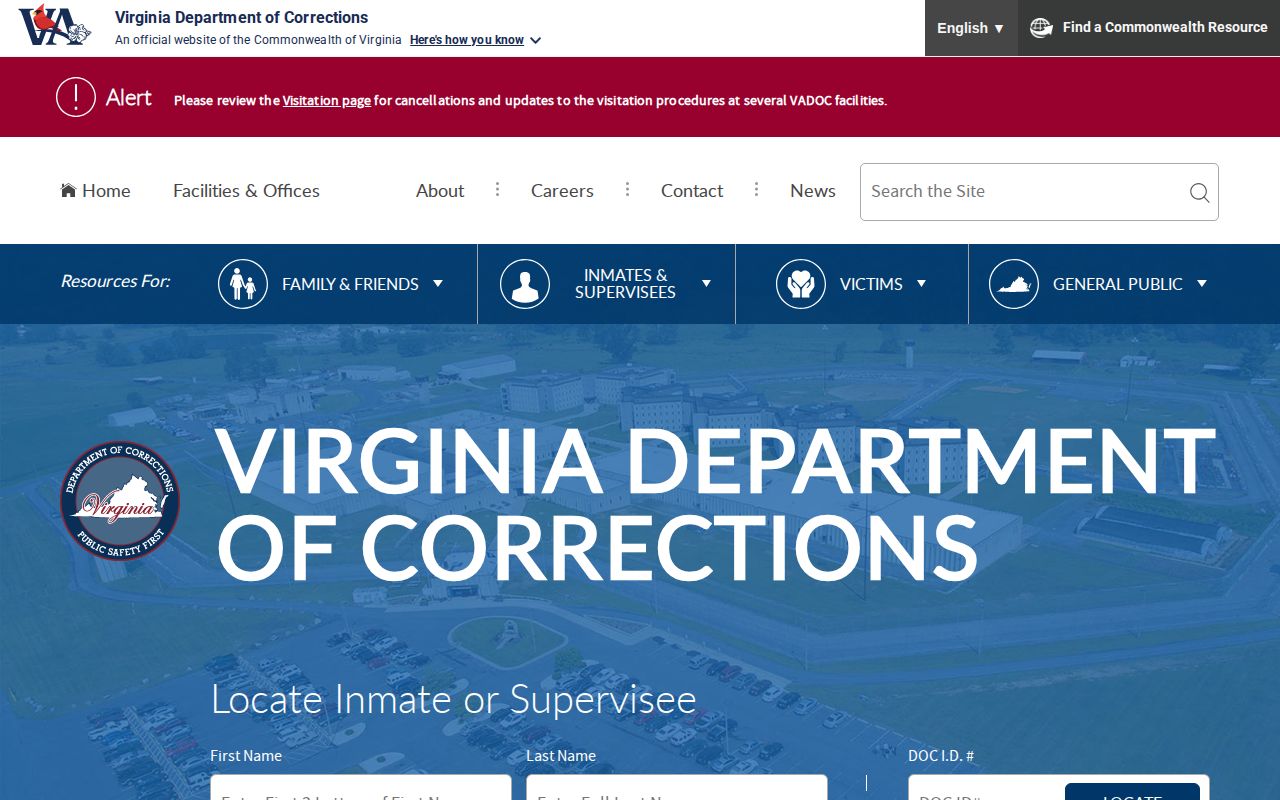
The agency is the record source for state prison release and supervision, while local jails keep their own transactions.
The agency's Facility Release information says the business office can arrange bus travel when needed. If posted Offender Pay funds are below $25, VADOC adds enough to reach $25. Medical staff may provide up to thirty days of discharge medication and supplies. Property is returned, and discharge clothing can be supplied when needed. Virginia also has a separate savings rule in § 53.1-43.1; the qualifying balance is paid at parole or final discharge. These are state-prison procedures, not promises about every local jail exit.
Virginia Release Trends
VADOC's June 2026 recidivism cohort report counted 12,202 state-responsible releases in fiscal year 2023 and 9,611 in fiscal year 2024. The agency defines this cohort as Virginia felons sentenced to at least one year and released from state-responsible incarceration, including some held in local or regional jails. These figures are not every Virginia jail exit and are not a live count of unique people.
The report links the fiscal year 2023 rise to concentrated retroactive Enhanced Earned Sentence Credit releases in July and August 2022. That makes a simple year-to-year reading risky. Release totals, parole grants, confined population, and supervision caseloads measure different things. Each figure needs its own date and definition.
Search Virginia Released Inmates
Start with the last known custody layer. Do not search every portal and treat silence as a release. A negative result has different meaning in each system. VADOC describes current custody or supervision, not a permanent archive of every discharge. Jail rosters omit people who no longer remain there. Federal and immigration tools have their own coverage windows.
- For a state sentence, search VADOC by name or seven-digit DOC number and read custody and supervision as separate statuses.
- For a city, county, or regional jail, find the facility and request its release transaction if the live roster no longer shows the name.
- Use Virginia court records to confirm bond, dismissal, sentence, revocation, or another order that explains the change.
- Check Virginia Jail VINE for a local custody event and use the separate VADOC notification program only when eligibility rules apply.
- For federal or immigration custody, use the BOP or ICE locator and follow any receiving-agency clue.
A transfer destination should become the next search. If the local release record names VADOC, open the state locator. If it names ICE or a federal custodian, switch to that system. When no portal supplies an old or final record, make a focused request to the office that maintained it.
VADOC Released Inmate Search
The official VADOC Inmate & Supervisee Locator covers people under Virginia Department of Corrections custody or supervision. A name search requires at least the first three letters of the first name and the full last name. A seven-digit DOC number is the strongest key. Optional filters include location, race, gender, and age range. The user must accept the disclaimer before selecting Locate.
| Search field | Use | Limit |
|---|---|---|
| First name | Identity search | At least the first three letters |
| Last name | Identity search | Full last name |
| DOC number | Direct identifier search | Seven digits |
| Location, race, gender, age | Optional refiners | Too many filters can hide a match |
The locator updates daily and warns that information may be inaccurate or outdated. A district-office placement can show that a person left prison but remains supervised. No result does not prove release or discharge. A fully discharged person may fall outside the stated scope, so use a VADOC records request for the actual release, time-computation, inactive-offender, or discharge record. The VADOC offender search reference explains that state-record route in depth.
Virginia County Release Records
Local custody in Virginia is fragmented across city jails, county jails, and regional authorities. The jail that booked and released the person is the first source for the release date, time, disposition, and transfer destination. The sheriff for the arrest location may not run the regional jail that held the person. Use the physical facility and operating authority shown in the booking record.
Regional facilities also serve more than one locality. A person booked for one county can be housed elsewhere, transferred again, or released under an order from a member court. Search the last known jail first. If the live roster is blank, request the release transaction and compare it with the court docket and a Jail VINE event. A roster disappearance alone cannot distinguish bond from transfer.
Virginia Supervision After Release
Parole, probation, and post-release supervision place a physically released person under community rules. VADOC supervises these cases through district offices in Eastern, Central, and Western regions. The locator can show a district placement for a probationer or parolee. Follow-up belongs with the office serving the reported supervision area, not automatically the place where the arrest happened.
The Virginia Parole Board meeting calendar documents public Board business, including applicable final deliberations, but it is not a list of every individual interview or release.

Monthly decision reports must still be separated from the later VADOC release event and any final discharge record.
Virginia Release Alerts and Transfers
Virginia Jail VINE supplies local and regional jail custody information and event alerts. Search one person, compare the identity and reporting jail, then select an offered phone, text, email, TTY, or in-app notice. A phone registration uses a PIN. A local jail release alert can also mean transfer, so confirm the destination before calling it community release.
The official VINELink service provides Virginia selection and specific-person search tools.
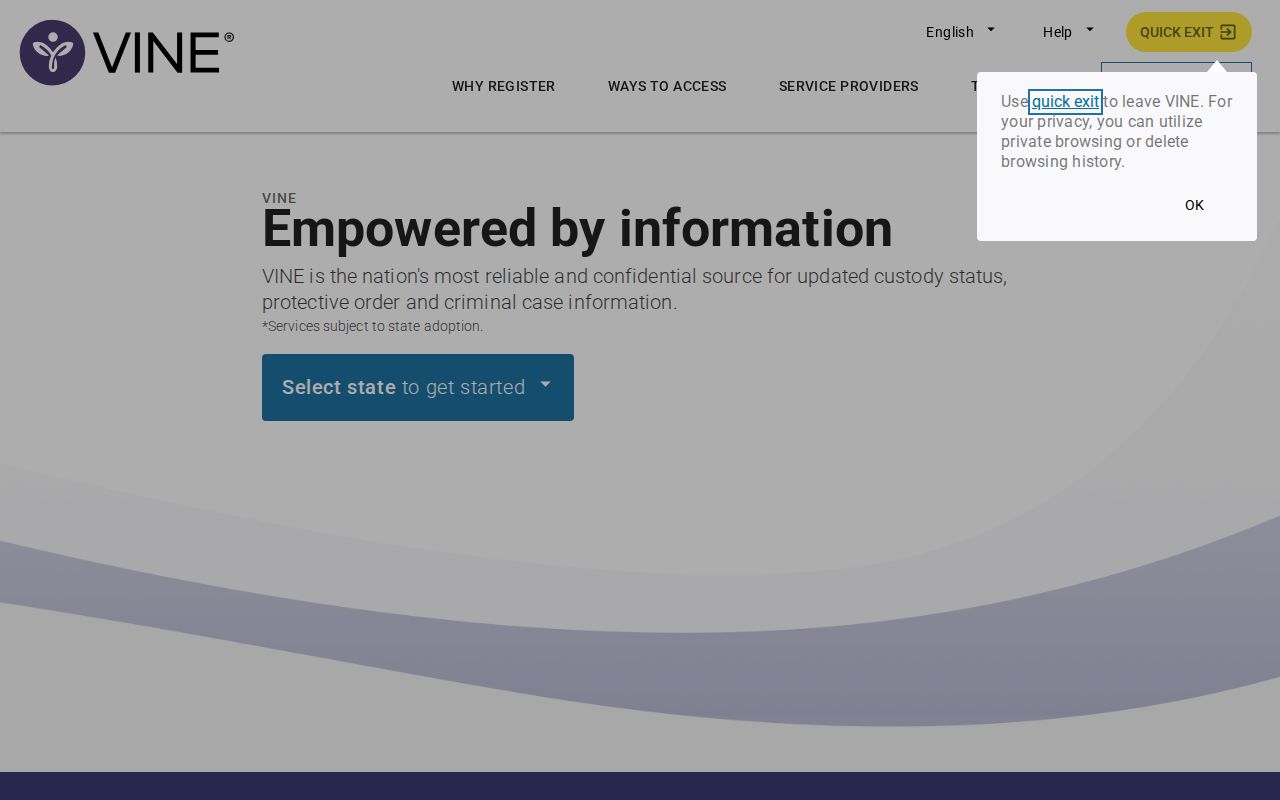
VADOC's NAAVI program is separate and limited to eligible victims and qualifying family members, so registration does not move between the jail and state systems.
NAAVI may send an anticipated-release notice before an expected date and an actual-release notice when VADOC custody ends. Those messages answer different questions. The first is a projection. The second reports the state custody event, but it does not rule out a detainer or new custodian.
Virginia Portal Search Limits
Federal custody requires the BOP Inmate Locator. It searches records from 1982 forward by register number or name. BOP explains that “Released” means the person is no longer in BOP custody, while “Not in BOP Custody” can also appear. Neither label rules out state, local, immigration, or another federal custodian.
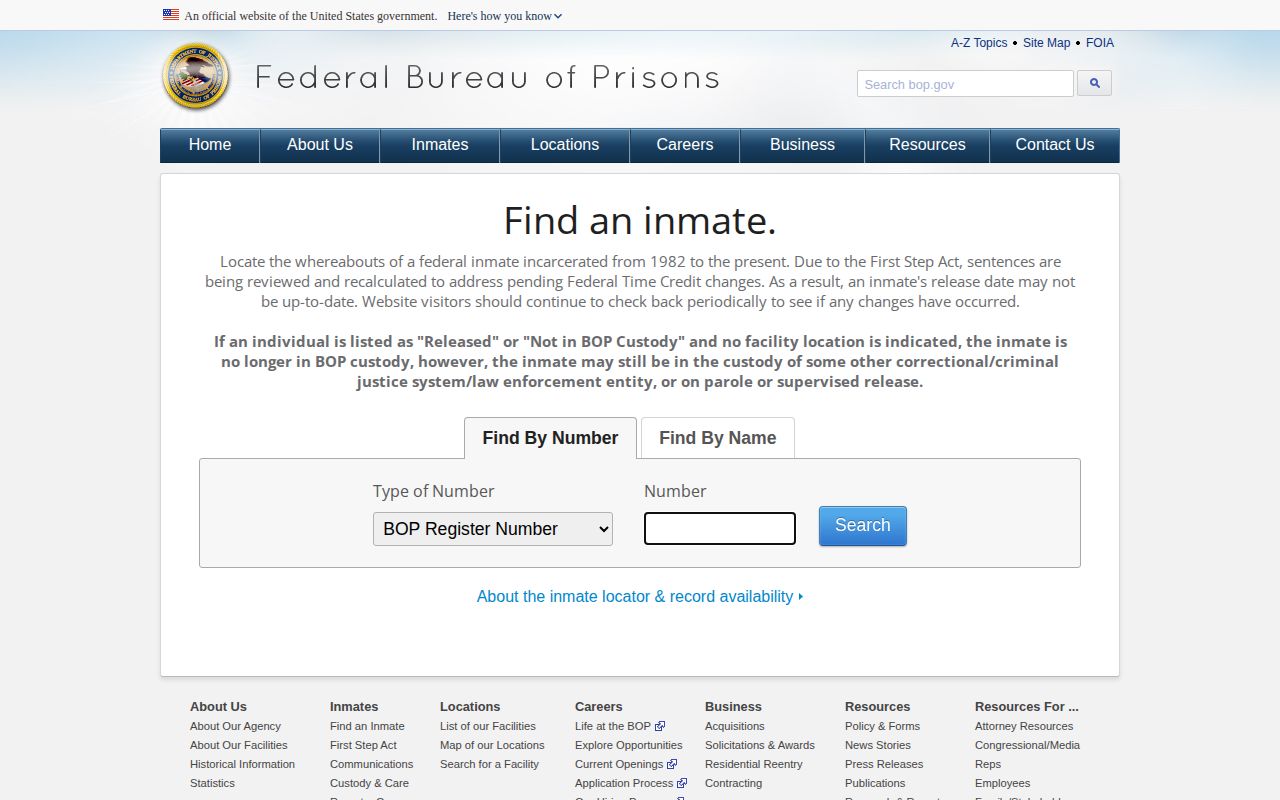
The federal result answers only the BOP custody question and does not describe any term of federal supervised release.
ICE's Online Detainee Locator covers current ICE custody, certain longer CBP holds, and people released from ICE custody within about sixty days. That short period is not a permanent archive. Virginia court portals have a different gap: OCIS 2.0 describes broad adult case coverage but names Fairfax Circuit Court as a circuit exception. A missing result can therefore reflect data scope, timing, spelling, or another custodian rather than release.
| System | What a result can establish | What absence cannot prove |
|---|---|---|
| VADOC | Current state custody or supervision placement | Final discharge or permanent historical absence |
| Local jail roster | Current custody at that jail | Community release rather than transfer |
| BOP | Federal custody status and some release dates | No other custodian or supervision |
| ICE | Covered current custody and a limited recent-release window | No older immigration release |
| Virginia courts | Orders and case disposition in participating courts | The exact jail out-processing time |
Virginia Facilities and Releases
Virginia's custody network includes local and regional jails, VADOC prisons and correctional programs, federal prisons, immigration detention, and juvenile facilities with separate privacy rules. Facility type controls the record path. A local jail release goes to that authority's transaction. A VADOC prison release goes to state computation and release records. FCI Petersburg and USP Lee require the federal locator, while an immigration detention event requires ICE.
Closed and status-uncertain facilities still matter for older records. A historical file may name Augusta Correctional Center, Mecklenburg Correctional Center, Hampton Roads Regional Jail, Stafford Men's CCAP, or Sussex II State Prison. The former facility should not be treated as a current custodian, but its name can identify the agency that holds the archived release record.